This was my first trip to Vietnam. I spent three days in Ho Chi Minh City [formerly called Saigon], then flew to Hanoi where I spent three days, then returned to Ho Chi Minh City where I spent the night before flying home. Ho Chi Minh City is the largest city in Vietnam with a population of about 6 million people. Ho Chi Minh City consists of 19 urban districts where about 75 % of the population live, and 5 rural districts which stretch almost to the border with Cambodia. My hotel was on the border of Districts 1 and 3 which were the former residential areas where the French colonial population lived. It was a very nice area with many cafes and restaurants, and the major sights were within walking distance. These are views from my hotel window of the surrounding streets.
Ho Chi Minh City is very busy with the streets filled with scooters and motorcycles as well as cars and buses that make it a challenge to cross from one side of the street to the other. The traffic does not stop for pedestrians crossing the street, and once you start walking across the streets you can't stop or turn back or you would surely be run over. This is a view of a street by the Saigon River that I crossed early in the morning before the traffic was too bad. When I got to the other side I got a thumbs up from a guy standing on the corner.
On the thousands of motorcycles and scooters you would see people dressed in business clothes, casual clothes, and often entire families on the motorcycles or scooters, even small children.
The French colonized Indochina in the mid 19th century and Saigon was their capital city. Saigon served as the capital of the Republic of Vietnam from 1956 to 1975 when North Vietnamese forces took the city, and renamed it Ho Chi Minh City. Because of the 100 years of French colonial control much of the architecture of the city and many of the major landmarks have a strong French influence. Notre Dame Cathedral was built between 1877 and 1883.
The Central Post Office was designed by Gustave Eiffel and was built between 1886 and 1891. The walls of the grand concourse are painted with historic maps of South Vietnam, Saigon, and Cholon, while a mosaic of Ho Chi Minh stands at the end of the barrel-vaulted hall.
The Opera House, now known as the Municipal Theatre, was built in 1897 and is one of the city's most recognisable buildings. It was also the meeting spot for the beginning of my day tour to the Mekong Delta.
The day tour to the Mekong Delta was very interesting. We took a two hour drive out of the city, through the surrounding rural area to the city of My Tho, located on one of the waterways in the delta area where the Mekong River makes its way to the South China Sea. In the rural area along the highway were many rice paddies and other agricultural fields.
In My Tho our group of about 10 people boarded a small boat for a ride across the river to an island where we walked around a small village, had refreshments, and were told about the rural life of the Vietnamese people. Our guide was named "Linda" and she referred to us as her family for the day.
In the village we saw one of the local industries, making honey from bee hives maintained by the villagers. One of the village girls had a bee covered hive that you could touch to get a taste of the honey which was very light and sweet tasting. They also had a number of caged birds and a rather large python snake which you could touch and place around your neck. Needless to say, the only members of my group brave [or stupid] enough to have the snake draped around their necks were the women in the group.
We then re-boarded our boat for a short trip to another island. Along the way we passed many beautiful smaller islands, and saw larger boats on the river carrying products such as bags of rice.
Once we landed on the next island we took a short walk through the jungle to a small restaurant where we had a delicious lunch of local fish and other Vietnamese delicacies.
After a short ride over jungle trails on a jeepney we boarded small hand propelled boats for a ride through mangrove swamp canals.
After our trip through the mangroves we got back onto our boat for the return trip to My Tho. Our guide provided us with a fresh coconut milk beverage, and upon arriving in My Tho we returned to Ho Chi Minh City. It was a great day trip and I enjoyed it very much.
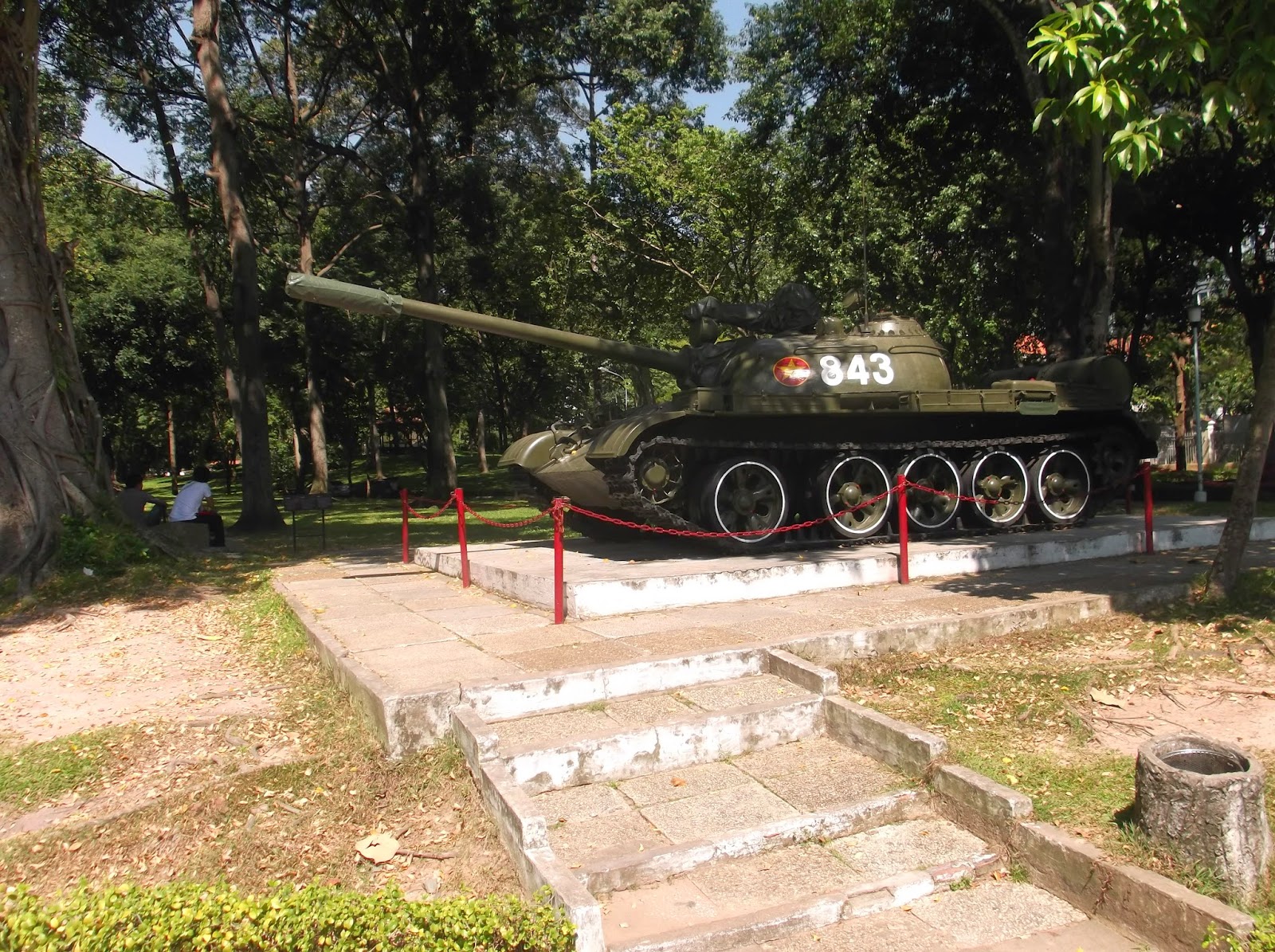
On my last day in Ho Chi Minh City I walked around the city and saw various sights, including the Reunification Palace. Formerly the Presidential Palace, in 1975 when the Viet Cong and North Vietnamese troops entered Saigon, they crashed through the wrought iron gates surrounding the palace with tanks and stormed the building where the South Vietnamese President surrendered. This historical event was recorded by various photojournalists and played around the world on television. I remember watching it on the news. Some of the original tanks are on display, and you could tour the inside of the building to see the opulent rooms of the former South Vietnamese presidents who lived and worked there during the war.
I enjoyed my short stay in Ho Chi Minh City very much, and now it's on to Hanoi!
Friday, December 26, 2014
Wednesday, December 17, 2014
SOFIA - OCTOBER, 2014
After a short flight from Bucharest, Romania, I landed in Sofia, the capital of Bulgaria. I really liked Sofia, which had a more small town feel than Bucharest. I stayed at the Radisson Hotel which was across the street from the National Assembly building. This is a view from my room, with the National Assembly building [white] across the street. The golden dome of the Aleksander Nevski Memorial Church is seen in the distance behind the National Assembly building.
On my first day in Sofia I took a two hour walking tour of the central part of the city, where most of the historical sights are located. Our guide was high energy, fast talking and fun, that reminded me of a dark haired Charlyn.
Sveta Nedelya Cathedral is one of Sofia's major landmarks. Completed in 1863 it is famous for its rich Byzantine-style murals. It was blown up by communists in 1925 in an attempt to assassinate Tsar Boris III. Over 120 people were killed in the attack including most of the cabinet, but the Tsar escaped unharmed. I guess that terrorism has been around for a long time.
The Banya Bashi Mosque is Sofia's only remaining working mosque, reflective of the period when Bulgaria was under the domination of the Ottoman Turks. Its red brick minaret is a convenient landmark when you are finding your way around the old town area.
The Mineral Baths, originally built in 1913, are being restored, and are the site of occasional art exhibitions. The mineral baths themselves will be opened in the near future.
The President's Building houses the private offices of the Bulgarian President. The entryway is guarded by costumed guards, and there is a changing of the guard ceremony every hour.
Sofia's major tourist attraction is the Aleksander Nevski Memorial Church. It was located only a short 5 minute walk from my hotel. It was built between 1882 and 1912 in memory of the 200,000 Russian soldiers who died fighting for Bulgaria's independence during the Russo-Turkish War. These are views of the exterior of the church:
On my second day in Sofia I took a day trip to the Rila Monastery, which was a 2 1/2 hour drive from Sofia. It was a pleasant drive, and provided an opportunity to see the rural area outside of the city of Sofia. The Monastery is located in a forested valley in the Rila Mountains. The Monastery was founded by a hermit monk in 927 AD, and was vital in the preservation of Bulgarian culture under the rule of the Ottoman Empire. In 1833 almost all of the monastery was destroyed by fire, but has been restored. In 1983 it was declared an UNESCO World Heritage Site. The Monastery consists of a main church, two museums, guest rooms and a post office. It was a very quiet and peaceful area, and because the fall foliage was changing colors, it was even more beautiful.
The 23 meter high Hreliova Tower, built in 1335 is the only remaining original structure at the Monastery. It was used as a place of refuge to protect the monks and pilgrims from marauding Turks and bandits.
Because the people of that time were unable to read the bible, murals on the interior and exterior of the church depicted the biblical stories that we are familiar with today.
After touring the Monastery grounds, I had about 20 minutes time to look around the area surrounding the Monastery. There were several souvenir stands, and a small outside restaurant, all with beautiful views of the surrounding mountains and creeks flowing through the valley.
After leaving the Monastery, we drove a short distance and had lunch at a small restaurant located alongside the river. I had a delicious grilled trout lunch. I really enjoyed my trip to Sofia, and the countryside of Bulgaria and have many fond memories of the sights that I saw there.
On my first day in Sofia I took a two hour walking tour of the central part of the city, where most of the historical sights are located. Our guide was high energy, fast talking and fun, that reminded me of a dark haired Charlyn.
Sveta Nedelya Cathedral is one of Sofia's major landmarks. Completed in 1863 it is famous for its rich Byzantine-style murals. It was blown up by communists in 1925 in an attempt to assassinate Tsar Boris III. Over 120 people were killed in the attack including most of the cabinet, but the Tsar escaped unharmed. I guess that terrorism has been around for a long time.
The Banya Bashi Mosque is Sofia's only remaining working mosque, reflective of the period when Bulgaria was under the domination of the Ottoman Turks. Its red brick minaret is a convenient landmark when you are finding your way around the old town area.
The Mineral Baths, originally built in 1913, are being restored, and are the site of occasional art exhibitions. The mineral baths themselves will be opened in the near future.
The President's Building houses the private offices of the Bulgarian President. The entryway is guarded by costumed guards, and there is a changing of the guard ceremony every hour.
Sofia's major tourist attraction is the Aleksander Nevski Memorial Church. It was located only a short 5 minute walk from my hotel. It was built between 1882 and 1912 in memory of the 200,000 Russian soldiers who died fighting for Bulgaria's independence during the Russo-Turkish War. These are views of the exterior of the church:
On my second day in Sofia I took a day trip to the Rila Monastery, which was a 2 1/2 hour drive from Sofia. It was a pleasant drive, and provided an opportunity to see the rural area outside of the city of Sofia. The Monastery is located in a forested valley in the Rila Mountains. The Monastery was founded by a hermit monk in 927 AD, and was vital in the preservation of Bulgarian culture under the rule of the Ottoman Empire. In 1833 almost all of the monastery was destroyed by fire, but has been restored. In 1983 it was declared an UNESCO World Heritage Site. The Monastery consists of a main church, two museums, guest rooms and a post office. It was a very quiet and peaceful area, and because the fall foliage was changing colors, it was even more beautiful.
The 23 meter high Hreliova Tower, built in 1335 is the only remaining original structure at the Monastery. It was used as a place of refuge to protect the monks and pilgrims from marauding Turks and bandits.
Because the people of that time were unable to read the bible, murals on the interior and exterior of the church depicted the biblical stories that we are familiar with today.
After touring the Monastery grounds, I had about 20 minutes time to look around the area surrounding the Monastery. There were several souvenir stands, and a small outside restaurant, all with beautiful views of the surrounding mountains and creeks flowing through the valley.
After leaving the Monastery, we drove a short distance and had lunch at a small restaurant located alongside the river. I had a delicious grilled trout lunch. I really enjoyed my trip to Sofia, and the countryside of Bulgaria and have many fond memories of the sights that I saw there.
Subscribe to:
Posts (Atom)